Snakes in Camp: Wayne's Brutal Breakdown of What's Actually Dangerous (And What Keeps Dogs Alive)
Wayne here. I map routes, I plan backups, and I hate surprises that can kill a dog. Snakes are the one camp hazard I cannot plan away, only plan around.
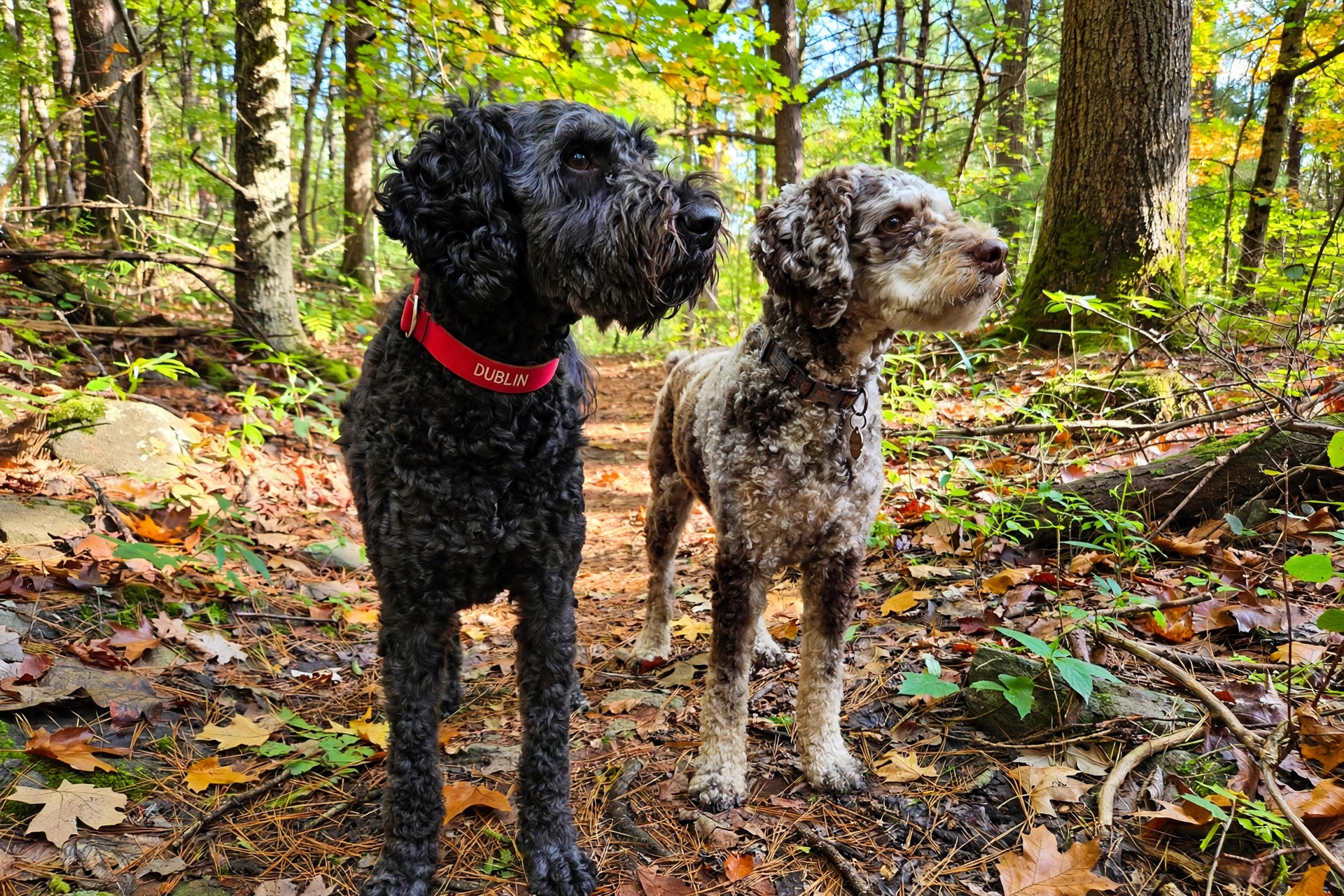
Last spring, we were setting up at a wooded site not far from home here in western North Carolina. I was still doing the walk-around, checking the pad and the hookups, when Chester bolted for a brush pile near the fire ring. Nose first, full speed, the way he does everything.
Then I saw it. Coiled in the leaf litter at the base of the brush, the exact color of dead leaves, dark hourglass bands across its back. A copperhead, sitting perfectly still the way they do. They do not rattle. They do not warn you. They just wait, invisible, exactly where a curious dog nose was headed.
I got a hand on his harness a half second before contact. Nobody got bit.
I stopped trusting luck that night and built a risk map instead. Here is what I actually learned.
The Risk Map: Where Snakes Hide in Your Campsite
I treat every new site like unfamiliar trail terrain. Before the dogs get out, I walk it and rank the zones.
The brush line and rock borders. Highest risk, every time. Snakes hunt rodents along cover edges, and rock borders around a site are basically rodent highways with roofs. If the site backs up against tall grass or a rock pile, that is the danger zone. Full stop.
The woodpile. Firewood stacks are five star snake hotels: dark, cool, full of gaps. I keep our firewood at the far edge of the site, off the ground on a rack, and never between the rig door and the dog area.
Under the rig and entry steps. Cool, dark, quiet. Snakes love the shade under a rig in hot country. I check under the steps and around the hookups with a flashlight before the dogs come out. Every time. No exceptions.
The picnic table area. Crumbs, food smells, shade. Lower snake risk than the brush line, but it is the rodent magnet that brings snakes to the neighborhood. More on that below.
Warm surfaces at night. In warm months snakes hunt after dark and rest on whatever is holding daytime heat. Concrete pads, asphalt, your entry mat. I sweep the flashlight across the pad before the last walk of the night.
What Actually Brings Snakes to Camp (vs. What People Think)
People think snakes come to camp to attack dogs. They do not. They come for three things, and a campsite serves all of them.
Rodents, first and by a mile. Every dropped crumb, every open trash bag, every spilled bowl of kibble feeds the mice. Mice bring snakes. This is the number one reason snakes show up at campsites, and it is completely preventable. A clean site is the single best snake deterrent that exists.
Water. Dog bowls, dripping hookups, the puddle under the AC drain. In dry country, your campsite is the oasis. Bowls go near the door or inside the pen, not out at the brush line. Fix the dripping hookup.
Shelter. Under the steps, behind the cooler, in the firewood, under the table. Every bit of cool dark cover is an invitation.
You are not fighting snakes. You are removing invitations. Get that and everything else is just execution.
What Actually Works
Tested across mountain, forest, and desert sites. This is the short list of things that genuinely keep dogs alive.
The arrival walk. Dogs stay in the rig until I have walked the full perimeter. I check under the steps, around hookups, behind the cooler, under the picnic table, along rock borders and woodpiles. Boot or stick to shift things. Never a hand.
The surgically clean site. Trash sealed and inside. Dishes washed, not stacked by the fire ring. Dog food stored in the rig, bowls picked up between meals. I said it above and I will say it again: this one habit does more than everything else combined.
The short leash. Four to six feet, clipped to a harness I can grab. No retractable leashes in snake country. I need control within one second, not sixteen feet of cord.
The ground scan. Snakes match the dirt, the leaves, and the gravel. I scan the trail ten to fifteen feet ahead, like scanning traffic. Same discipline as a FOD walkdown on the carrier before flight ops: eyes down, walk the line, nothing missed. I have done that walk more times than I can count. Spot the thing that does not belong before it becomes a problem. The scenery will still be there after you look down.
The night protocol. After dark, dogs go out on leash with a flashlight. Our own site included. Especially our own site. Warm months mean snakes hunt at night, and they are exactly where a dog wants to sniff.
The vet address, saved before you need it. When I plan a stop, I save the nearest emergency vet in my phone. Not after the bite. Before. This is route planning, and it is the same discipline as mapping fuel stops.
What Does Not Work (The Honest List)
Mothballs and repellent granules. People swear by them. The evidence says they do not reliably repel snakes, and mothballs are toxic to dogs and kids. I am not scattering poison around my campsite to fight a problem that a clean site already solves.
Killing every snake you see. Aside from the legal issues in some states, a dead snake near camp usually means you have a rodent problem you have not fixed. And a dead venomous snake can still bite by reflex. Leave it alone, give it space, move the dogs.
Trusting aversion training as a shield. Snake aversion training exists, and some handlers swear by it. It is a tool, not a shield. It does not replace a leash and your eyes. Talk to your vet and a qualified trainer before you decide. We have not outsourced our safety to it.
Assuming your dog will warn you. Dublin is stoic and observant. Chester is a missile with a nose. Neither of them is a reliable snake detector. Your dog's curiosity is the risk, not the solution.
The movie stuff. If a bite happens: do not cut the wound, do not try to suck out venom, do not apply a tourniquet, do not ice it, do not dose from your cabinet. None of it helps. Most of it harms. I have seen all of it suggested in campfire talk. All of it is wrong.
If Your Dog Gets Bit: The Real Protocol
Read this now, while you are calm. In the moment you will not think straight.
1. Get the dog away from the snake. Do not chase it. Do not try to kill it. If you can snap a photo from a safe distance in two seconds, it helps the vet. The dog matters more than the ID. Move.
2. Keep the dog still. Carry them if you can. Every bit of movement spreads venom faster. Hardest rule to follow, most important one there is.
3. Get the collar off. Swelling starts fast, especially with neck bites. Loosen or remove it before it becomes a tourniquet you did not intend.
4. Drive to the vet. Call ahead. Antivenom works best in the first hours. Minutes matter more than anything you can do at the site. This is why the vet address was already in your phone.
5. Talk to your vet about snakebite preparedness before the season. The rattlesnake vaccine on the market is labeled for rattlesnake venom, not copperheads, so it is not the answer out here. The real protection is everything above this line. Have the conversation with your vet early, not during the crisis.
The Honest Assessment
Here in western North Carolina, snake country is our backyard. Copperheads are the main threat around our campsites, with timber rattlesnakes up in the higher elevations. Copperheads are ambush hunters. They do not rattle, they do not move, and their camouflage in leaf litter is nearly perfect. You will walk right past them without knowing. That is what makes them dangerous, and that is why the system matters more than your eyes.
But here is what I actually believe after mapping site after site: the risk is manageable, and the people who get surprised are the people who did not do the walk. Every close call I have heard about at a campground traces back to the same three failures. Dirty site. Dog off leash or on a long line. Nobody checked the ground.
Do the arrival walk. Keep the site clean. Short leash. Flashlight at night. Vet address saved. That is the whole system, and it works.
The Bottom Line
Do not let the Instagram version of camping fool you. The pretty site backed up against the brush line with the woodpile by the door and the dog bowl out by the rocks is a snake habitat with a picnic table in it.
Chester still charges at every brush pile like it owes him a treat. The difference is that now there is a risk map, a short leash, and a guy with a flashlight between his nose and whatever is coiled under it.
Real adventure is not a campsite that looks wild. It is a campsite where your dogs come home safe.
Disclaimer: We are not doctors, nor veterinarians. Nothing here should be taken as absolute truth. This post is for information only, and we are not responsible or liable for any actions that might occur. When in doubt, call your veterinarian, doctor, or other certified professional.